
The General Characteristics Of A Highly Ranked NMTC Application – Part Two

The General Characteristics Of A Highly Ranked NMTC Application – Part Two

Part One of this blog discussed the New Markets Tax Credits (NMTC) Application Process. There are two phases to the NMTC Application process. Unfortunately, not all applications make it to the second phase. Our goal is to provide you with helpful tips to improve your NMTC application. An application must demonstrate a business strategy possessing certain characteristics when it is evaluated in Phase One to ensure that it receives a high enough score to qualify for continued evaluation in Phase Two. Today, we will discuss the characteristics that may enhance your NMTC application’s business strategy and hopefully merit an NMTC allocation.

There were 208 Allocation Applications made by various Community Development Entities (CDEs) throughout the country. The Community Development Financial Institutions Fund (CDFI Fund) received requests for $15.1 billion in NMTC allocations. One hundred CDEs, or 48.1% of the applicant pool, received allocation awards totaling $5 billion, which constituted approximately 33.1% of the total amount requested by applicants.

As would be expected, the financial health of the Applicant is of paramount importance. Factors such as the fee structure and the overall financial stability of the Applicant’s business entity are also characteristics of a potentially highly qualified application.

A good application will indicate:

  1.  The Applicant possesses a track record of raising Qualified Equity Investments (QEIs).
  2.  The Applicant’s past NMTC activities with prior Allocation Applications.
  3. The Applicant’s proposed commitments to provide Qualified Low-Income Community Investments (QLICIs) in Non-Metropolitan Counties.
  4. The Applicant’s  propensity to engage in innovative investments.

Applications are scored on a point system. An NMTC application will receive up to five additional points for demonstrating consistent service to disadvantaged businesses or communities. An application will also receive up to five additional points for committing to invest substantially all proceeds from QEIs. Applications that fail to achieve certain minimum scores in the Business Strategy section and Community Outcomes section of the application will receive no further consideration and will be deemed not to be highly qualified NMTC applications.

Because the Panel reviews information related to prior allocations in Phase Two, it is important to be prepared to explain any discrepancies that may cause questions or unfavorable conclusions related to former awards. It is also important to be prepared to provide any supplemental information requested by the CDFI Fund during the Phase One review process.

A highly ranked application will demonstrate that the Applicant has a high capacity to deploy and monitor NMTC investments. It will show a history of the Applicant’s business providing direct loans or equity investments. An exemplary application will exhibit the important relationships and consequential benefits for a Qualified Active Low-Income Community Business (QALICB). It will clearly show a healthy distribution of benefits among the investor, CDEs, and QALICBs.

A qualified application will prove that clear and meaningful community outcomes are likely to occur and benefit low-income persons or residents of low-income communities. And, that the Applicant’s investment decisions meet the needs of the communities they support and the economic development priorities of low-income communities they serve.

Further, a successful Applicant will unequivocally demonstrate that its products will be significantly more flexible than market standards. For each product, the Applicant will clearly describe the circumstances under which and how frequently the best rates and terms would be available and provide examples and comparisons to what is typically offered by the Applicant and offered by other financial institutions or investors in the Applicant’s service area. The Applicant will provide an example of how each proposed product will be used to finance a proposed  NMTC investment.

For most Applicants, the application will indicate debt with interest rates of at least 50% below-market; or debt that otherwise satisfies the relevant requirements. Applicants investing in other CDEs will demonstrate a high likelihood that they will pass favorable rates and terms along to the borrowers.

The Applicant should demonstrate that it possesses the ability to begin making NMTC investments promptly. A highly qualified application will demonstrate the Applicant’s ability to deploy QLICIs commensurate with the allocation request.

If the application proposes to fund a single or small number of projects, the Applicant must demonstrate a high likelihood that its proposed projects are feasible based on the ability to secure financing, that they will close as planned, that the risks to timely closing are limited, and clearly identified. The application should present this information in tandem with a superior risk mitigation plan.

Finally, related to demonstrating an effective business strategy, a highly qualified application will demonstrate, during each of the past five years, an excellent track record of directly providing products and services similar to those it would provide with the QEI proceeds. An application with a relatively limited record of providing QLICI-type activities could also achieve a high score if it has a very strong five-year or longer track record of non-QLICI like investments that are distinctly aligned with its current business strategy.

Let’s Work Together to Develop our Communities If you want to learn more about NMTCs, contact Savage & Associates at 215.880.9441 in Philadelphia, or 202.817.3941 in Washington D.C. to arrange a consultation. Dionne Savage can assist you to evaluate the benefits provided by the New Market Tax Credits, Low-Income Housing Tax Credits, C-PACE, Historic Tax Credits programs, and other vital economic development tools that benefit low-income communities throughout the United States. Visit our website at Savage & Associates 24 hours a day, seven days a week for more information.


The General Characteristics Of A Highly Ranked NMTC Application – Part One

The General Characteristics Of A Highly Ranked NMTC Application – Part One

Applying for New Markets Tax Credits (NMTC) allocation is complicated. At Savage & Associates, we strive to support this process for our clients. We can help you realize your dreams to help your local communities. The best way to accomplish this is to ensure that you submit a thorough NMTC  application. This first blog on this topic discusses the application process and several characteristics of a highly ranked NMTC application.

The Community Development Financial Institutions Fund (CDFI Fund) received 208 Allocation Applications from Community Development Entities (CDEs), requesting a total of just over $15 billion in allocations. The CDFI Fund made allocation awards totaling $5 billion, or about 33.1% of the total amount requested by applicants, to 100 CDEs which was almost half (48%) of the total applicant pool.

The Application Process – Phase One

There are two phases to the review of an NMTC application. Applicants receive points for demonstrating certain attributes. In Phase One, two reviewers independently evaluate and score the Business Strategy and Community Outcomes sections of the application.

An Applicant will receive additional points for demonstrating a track record of serving disadvantaged businesses or communities and committing to invest substantially all proceeds from Qualified Equity Investments (QEIs) in unrelated entities.

For an Applicant to receive further consideration in Phase Two of the application process, an application must achieve certain minimum scores in the Business Strategy section and Community Outcomes section of the NMTC application. Failure to receive the minimum score in each section will cause the application to be considered not highly qualified. Therefore, it will receive no further consideration.

At the end of Phase One, all applications that achieve minimum scores in the Business Strategy section and Community Outcomes section of the NMTC application and are considered highly qualified will be sent to the Panel for further review in Phase Two.

The Application Process – Phase Two

The Panel will also review information related to prior allocations, including the CDFI Fund’s Awards Management Information System. This data may also include audited financial statements and other supplemental information requested by the CDFI Fund.

In determining allocation award recommendations, Panelists in Phase Two consider the following list which is not all-inclusive:

  • *Any issues noted by the Phase 1 reviewers.
  • *The Applicant’s capacity to deploy and monitor NMTC investments.
  • *The Applicant’s record of providing direct loans and/or equity investments.
  • *The existence of notable relationships and their benefits (cost savings, lower fees) for Qualified Active Low-Income Community Business (QALICB) or unaffiliated end-users.
  • *Whether clear and meaningful community outcomes are likely to occur and benefit Low-Income Persons and/or residents of Low-Income Communities, based on the Applicant’s pipeline projects, including the Applicant’s ability to track community outcomes.
  • *The Applicant’s investment decisions aligning with community priorities.
  • *The financial health and feecompensation structure of the Applicant.
  • *The distribution of benefits among the investor, CDEs, and QALICBs.
  • *The Applicant’s track record of raising QEIs. Panelists also considered the consistency of the Applicant’s past NMTC activities with prior Allocation Applications, if applicable, as well as the Applicant’s proposed commitments to provide Qualified Low-Income Community Investments (QLICIs) in Non-Metropolitan Counties and engage in innovative investments.

The CDFI Fund also reviews compliance, due diligence, eligibility, and regulatory matters including:

  • *Whether an Applicant or its affiliates were previously awarded funds through other CDFI Fund programs and maintained compliance with the  award agreement.
  • *Whether prior-year Allocatees successfully issued the minimum requisite QEIs and made the minimum requisite QLICIs from prior NMTC Allocations as specified in the Notice of Allocation Availability (NOAA).
  • *Whether prior-year Allocatees were compliant with the requirements of past Allocation Agreements.
  • *For regulated financial institutions, information from the Applicant’s primary federal regulator. 
  • *Information related to the Assurances and Certifications section of the application.

Next, as provided for in the NOAA, the NMTC Program staff reviews the initial allocation determinations to ensure that:

(i) the proportion of Allocatees that are Rural Community Development Entities (Rural CDEs) was, at a minimum, equal to the proportion of highly qualified Applicants that were Rural CDEs; and

(ii) at least 20% of all QLICIs made by Allocatees under the 2020 allocation round would be invested in Non-Metropolitan Counties, based upon commitments made in their applications.

In our next blog, Part Two, we will examine the business strategy characteristics of a highly qualified NMTC application.

Let’s Work Together to Develop our Communities

If you want to learn more about NMTCs, contact Savage & Associates at 215.880.9441 in Philadelphia, or 202.817.3941 in Washington D.C. to arrange a consultation. Dionne Savage can assist you to gain access to the benefits provided by the New Markets Tax Credits, Low-Income Housing Tax Credits, C-PACE, Historic Tax Credits, and other vital economic development tools that benefit local communities throughout the United States. Visit our website at Savage & Associates 24 hours a day, seven days a week for more information.

Key Highlights Of The 2021 $5 Billion NMTC Allocations

NMTC Allocations

In September, the Community Development Financial Institutions Fund (CDFI Fund) announced $5 billion in New Markets Tax Credits (NMTCs). The CDFI Fund awarded tax credit allocations to 100 Community Development Entities (CDEs). The allocation amounts range from $15 million to $65 million. The CDFI Fund made allocation awards to approximately 33.1% of the total amount requested by applicants, to 100 CDEs, which was 48% of the total pool of applicants.

45 of the 100 CDEs will focus investment activities on a national service area, 26 will focus on a multi-state area, 13 will focus on a specific state, and 16 will focus on specific local service areas. Estimates reveal that the award recipients will make more than $1 billion in New Markets Tax Credit investments in non-metropolitan counties.

The CDFI Fund’s NMTC allocation raises the total amount awarded through the program to $66 billion. The record shows that NMTC Program awards have generated $8 of private investment for every $1 invested by the federal government.

Some other key highlights of the 2021 allocations:

  • *Approximately $3.8 billion (78%) of NMTC investment proceeds will likely be used to finance and support loans to or investments in operating businesses in low-income communities.
  • *Approximately $1.1 billion (22%) of NMTC investment proceeds will likely be used to finance and support real estate projects in low-income communities.
  • *$2.689 billion will be invested in major urban areas.
  • *$1.106 billion will be invested in minor urban areas.
  • *$1.094 billion will be invested in rural areas.

Four Pennsylvania entities received NMTC allocations. They include the following:

Reinvestment Fund, Inc. ($60 million)

Reinvestment Find, Inc. aspires to expand opportunities. Since founded in 1985, Reinvestment Fund has invested more than $2.4 billion in Philadelphia’s they do more than just philly deals I think they are very active in Baltimore] deserving communities in the most need. It focuses on using financial and analytical tools to provide policy solutions that encourage economic growth.

PIDC Community Capital ($60 million)

PIDC Community Capital (PIDC) offers years of experience helping the communities of Philadelphia develop and grow. It structures and invests in public-private partnerships that serve Philadelphia’s key policy areas and developmental priorities. PIDC features flexible financing tools and a targeted portfolio of industrial and commercial real estate to support its mission “to spur investment, support business growth, and foster developments that create jobs, revitalize neighborhoods, and drive growth to every corner of Philadelphia.”

PNC Community Partners, Inc. ($55 million)

PNC Community Partners, Inc. received $55 million in NMTC allocation to benefit the residents and communities of Pittsburgh. PNC operates nationally and has $553 million in direct allocation under management. It is an active investor through third-party CDE relationships with expertise in closing transactions with multiple CDEs.

Pittsburgh Urban Initiatives, LLC ($50 million)

PUI supports the community and economic development objectives of the Urban Redevelopment Authority of Pittsburgh. In total, PUI has received $188 million in total NMTC allocation to benefit the City of Pittsburgh. PUI has created 2,066 construction jobs and 3,72 permanent jobs in Pittsburgh!

As a CDE, PUI’s hard work has had a prodigious effect on low-income neighborhoods by facilitating New Markets Tax Credit (NMTC) investments for projects in Pittsburgh. Some of these amazing projects include:

  • *$6 million investment in 7800 Susquehanna Street
  • *$6 million investment in City of Asylum
  • *$2 million investment in The Proud Company
  • *$6 million investment in Mill 19

It is never too early to start preparing for the next round of NMTC allocations. Savage & Associates can help you every step of the way.. Call us today!

Let’s Work Together to Develop our Communities

f you want to learn more about NMTCs, contact Savage & Associates at 215.880.9441 in Philadelphia, or 202.817.3941 in Washington D.C. to arrange a consultation. Dionne Savage can assist you to evaluate the benefits provided by the New Market Tax Credits, Low-Income Housing Tax Credits, C-PACE, Historic Tax Credits programs, and other vital economic development tools that benefit low-income communities throughout the United States. Visit our website at Savage & Associates 24 hours a day, seven days a week for more information.
A List Of Reasons Your NMTC Application May Have Failed

NMTC Application

The Community Development Financial Institutions Fund (CDFI Fund) awarded $5 billion in tax credit allocations to 100 Community Development Entities (CDEs). The allocation awards were announced in September. The amounts allocated to almost 50% (48.1) of pool applicants ranged from $15 million to $65 million. However, this means that over half of the applicants for allocation awards were denied.

Savage & Associates can provide a thorough review of your NMTC application and provide the critical analysis that can help to improve your application  The following is a list of reasons why your application may have been denied.

The Applicant is not certified as a CDE

o be eligible to apply for NMTC Allocations from the CDFI Fund in the Allocation Round, an Applicant must: (a) be certified as a CDE at the time the CDFI Fund receives its NMTC Program Allocation Application; or (b) have submitted a CDE Certification Application in Awards Management Information System (AMIS) by the applicable deadlines. Savage & Associates can help your entity obtain certification as a CDE.

A poor past compliance record

The CDFI Fund considers whether you have complied with the terms and conditions of previous or existing assistance, award, or Allocation Agreements with the CDFI Fund. If your compliance record is poor, it may be a reason that your application for an NMTC allocation was denied.

Remember, if you are a prior award recipient or Allocatee under any other CDFI Fund program, it is highly recommended that you:

a) Submit all required reports by the deadlines specified in the assistance, award, or Allocation Agreements governing your prior awards or Allocations and to comply with all requirements included in the award documents n; and

b) Confirm that any affiliate that is a prior CDFI Fund awardee or Allocatee, has submitted all required reports to the CDFI Fund.

You failed to issue the required minimum amount of QEIs and close a minimum amount of QLICIs from prior allocation(s)

Applicants that have previously received an NMTC Allocation (or whose Affiliates have previously received an NMTC Allocation) are required to demonstrate that they have deployed the required minimum amount of QEIs and closed a minimum amount of QLICIs from their prior allocation(s) to be eligible for a new allocation award. The CDFI Fund will only consider as “issued” those QEIs that have been recorded and finalized. Those listed as “pending” will not be considered. At Savage & Associates, we pride ourselves on the work that we do after you receive your allocation to ensure that you meet all legal and administrative requirements associated with your project(s).

You failed to meet reporting deadlines

Any failure to meet the reporting deadlines outlined in any assistance, award, or Allocation Agreement(s) with the CDFI Fund during the period from October 29, 2019, to the Allocation Application deadline in the Notice of Allocation Authority (NOAA) have five points deducted from their application score. At Savage & Associates, we know that deadlines may be difficult to meet amidst the fast-paced everyday operations of CDE. Savage & Associates can provide the necessary guidance to ensure that you meet all deadlines set forth by any assistance award, or Allocation.

You failed to answer a question or explain a response on the application

The CDFI Fund has sole discretion to deem an Applicant’s Allocation Application ineligible if the CDFI Fund determines that the Applicant did any of the following related to the Allocation Application Assurances and Certifications:

a) Inaccurately responded to a question; or

b) Failed to submit any required written explanation; or

c) Failed to notify the CDFI Fund of any changes to the information submitted between the date of application and the date that the Applicant executed the Allocation Agreement if selected for an allocation award.

If an Applicant cannot certify to one or more questions, it must provide a written narrative explaining why the certification cannot be accomplished, the circumstances, and what the entity is doing to address the failure.

The Applicant submitted attachments that were not requested by the CDFI Fund.

The CDFI Fund only considers attachments that it has requested as part of the review process. The CDFI Fund will not accept any revisions, amendments, or attachments to an application once it is submitted. No materials only accessible through hyperlinks in submitted materials will be reviewed. All required documents must be submitted in AMIS.

Let’s Work Together to Develop our Communities

If you want to learn more about NMTCs, contact Savage & Associates at 215.880.9441 in Philadelphia, or 202.817.3941 in Washington D.C. to arrange a consultation. Dionne Savage can assist you to evaluate the benefits provided by the New Market Tax Credits, Low-Income Housing Tax Credits, C-PACE, Historic Tax Credits programs, and other vital economic development tools that benefit low-income communities throughout the United States. Visit our website at Savage & Associates 24 hours a day, seven days a week for more information.

The Neighborhood Homes Investment Act Helps Bridge The Value Gap In Financing For Urban Communities

The Neighborhood Homes Investment Act Helps Bridge The Value Gap In Financing For Urban Communities

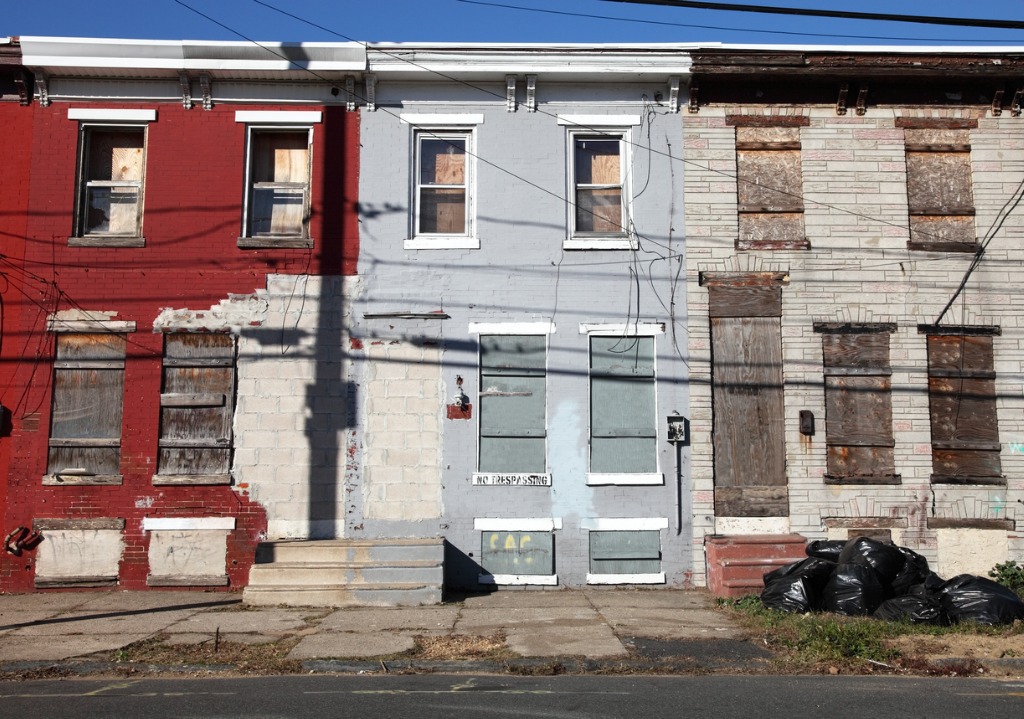
Owners, investors, and lenders wishing to rehabilitate low-income properties in many urban housing markets, including Philadelphia, have faced a serious dilemma for several decades. The problem arises because the combined costs of purchasing and rehabilitating a property in certain urban areas may be greater than the resulting appraised value of the property. Fortunately, there are government programs, grants, and subsidies, like the Neighborhood Homes Investment Act (NHIA), that attempt to cover this gap between the appraised value and market value of any urban property. This gap is referred to as the appraisal gap or value gap.

The dilemma related to bridging the value gap has caused disinvestment in low-income communities across the United States. When the combined costs of purchase and development exceed the resulting value of a property, investors are reluctant to pledge capital for development.

This problem of attracting investment has contributed to the significant deterioration and depreciation of property values in Black neighborhoods in urban markets. A new report by Redfin shows that homes in Black neighborhoods are undervalued by an average of $46,000 nationwide. A neighborhood is considered “primarily black” if 50% or more of its residents are black.

In Philadelphia, homes in primarily Black neighborhoods are undervalued by an average of approximately 27% or $26,000 when compared with similar homes in primarily white neighborhoods. In Philadelphia’s primarily Black areas, the average sale price of homes is about $96,600, compared with $162,600 in primarily white areas of Philadelphia.

To stop this urban blight, some cities, nonprofit organizations, banks, and other financial institutions have offered subsidies to spur investment. Of course, there are federal and state government programs such as The Neighborhood Homes Investment Act (NHIA), which was introduced in both houses of Congress as H.R. 2143 and S. 98. The NHIA is part of the American Jobs Plan.

The Neighborhood Homes Investment Act creates a tax credit for encouraging private investment in distressed communities to increase homeownership opportunities. The goal of the NHIA is to provide an influx of capital in the single-family construction, rehabilitation, and repair of one-to-four unit family residential properties.

The value gap contributes to conditions that inhibit sustained urban growth in low-income communities. In places where it costs more to build or rehab a house than the property’s eventual sale price, owners leave and walk away from homes that are inhabitable and incapable of being refinanced or sold. A financing tool is needed to close this value gap. The tax credit offered by the NHIA may be an acceptable tool.

The significant absence of money to reinvest in distressed, low-density neighborhoods creates favorable conditions for absentee owners to convert aging homeownership housing to rental housing. These landlords exploit the residents of these communities with relatively expensive, poorly maintained rental housing, thus further diminishing the quality of life in these neighborhoods.

The lack of reinvestment capital in low- and moderate-income neighborhoods has aggravated existing racial inequalities, particularly between African-American family wealth and the wealth of every other ethnic and racial group in the country. 

The Neighborhood Homes Investment may be the first step to help alleviate these conditions and spur local development while creating jobs and better housing. It is estimated that the following benefits will occur resulting from the passage of the NHIA:

  • 25,000 homes built or rehabilitated

  • $4.25 billion of total development activity

  • 33,393 jobs in construction and construction-related industries

  • $1.82 billion in wages and salaries

  • $1.25 billion in federal, state, and local tax revenues and fees

The tax credit provided by the NHIA will:

  • improve property values,

  • increase family wealth,

  • decrease blight and abandonment in distressed neighborhoods, and

  • create more and better options for shelter.

Let’s Work Together to Develop our Communities

If you want to learn more about the Neighborhood Homes Investment Act, contact Savage & Associates. Dionne Savage can help you gain access to the benefits provided by the NHIA, New Markets Tax Credits, Low-Income Housing Tax Credits, C-PACE, Historic Tax Credits, and other vital economic development tools. To reach us by phone, call 215.880.9441 in Philadelphia, or 202.817.3941 in Washington D.C. to arrange a consultation. You can also visit our website at Savage & Associates 24 hours a day, seven days a week for more information.

How The Neighborhood Homes Investment Act (NHIA) Works

How The Neighborhood Homes Investment Act (NHIA) Works

The Neighborhood Homes Investment Act (NHIA) has been introduced in the House of Representatives as H.R. 2143 and in the Senate as S. 98. The Biden administration has included the NHIA in the American Jobs Plan to help counteract the devastating economic effects of the COVID pandemic. The NHIA creates a tax credit that encourages private investment in distressed urban housing markets. It also is available to homeowners who need to renovate their homes. The purpose of the NHIA is to maintain neighborhoods and increase opportunities for homeownership.

The National Community Stabilization Trust (NCST) has commended the Biden administration for including the NHIA in the American Jobs Plan. The NCST supports families and communities by “restoring distressed single-family homes, strengthening neighborhoods, and increasing sustainable, affordable homeownership and responsible rental.”

Here is a summary of how the NHIA works.

States allocate NHIA tax credits on a competitive basis.

The NHIA intends to inspire the influx of capital in the single-family construction, rehabilitation, and repair of 1-4 unit residential properties. First, states publish allocation plans setting standards for construction cost and quality, as well as developer fees. States allow only the tax credits reasonably needed for financial feasibility. Ten percent (10%) of each state’s allocations are set aside for nonprofit sponsors. Selection criteria for planned projects include:

  • neighborhood need for new or rehabilitated homes,

  • neighborhood revitalization strategy and impact,

  • sponsor capability,

  • likely long-term homeownership sustainability, and

  • any other state criteria.

Project sponsors raise investment capital to finance home construction and substantial rehabilitation.

Sponsors for NHIA projects would include developers, lenders, and local governments. These sponsors develop the homes or work in tandem with builders and owners.

NHIA tax credits fill the gap between the development cost and final sales price – up to 35% of the cost of construction, rehabilitation, property acquisition, demolition, and environmental remediation. If homeowners contribute to the rehabilitation of their homes, NHIA tax credits fill the gap between the rehabilitation cost and the homeowner’s contribution up to 35% of the cost of rehabilitation.

Investors claim and receive tax credits after homes are completed, inspected, and owner-occupied.

A homeowner pays the sale price with a down payment and mortgage loan. The NHIA tax credit fills the gap between the development cost and the sale price. Sponsors may use any allocated but unneeded tax credits for developing additional homes.

Here is an example of home financing under the NHIA. If the acquisition and development costs equal $200,000 and the sales price is $160,000, the NHIA tax credit would cover the value gap of $40,000. The estimated impact of investment projects like this over ten (10) years would include:

• 500,000 homes built or substantially rehabilitated

• $100 billion of total development activity

• 785,714 jobs in construction and construction-related industries

• $42.9 billion in wages and salaries

• $29.3 billion in federal, state, and local tax revenues and fees

Let’s Work Together to Develop our Communities

If you want to learn more about the Neighborhood Home Investment Act, contact Savage & Associates. We can help you gain access to the benefits provided by this new, beneficial, legislation. We can also help you utilize the benefits of New Markets Tax Credits, Low-Income Housing Tax Credits, C-PACE, Historic Tax Credits, and other vital economic development tools. To reach us by phone, call 215.880.9441 in Philadelphia, or 202.817.3941 in Washington D.C. to arrange a consultation. You can also visit our website at Savage & Associates 24 hours a day, seven days a week for more information.